EN
EN



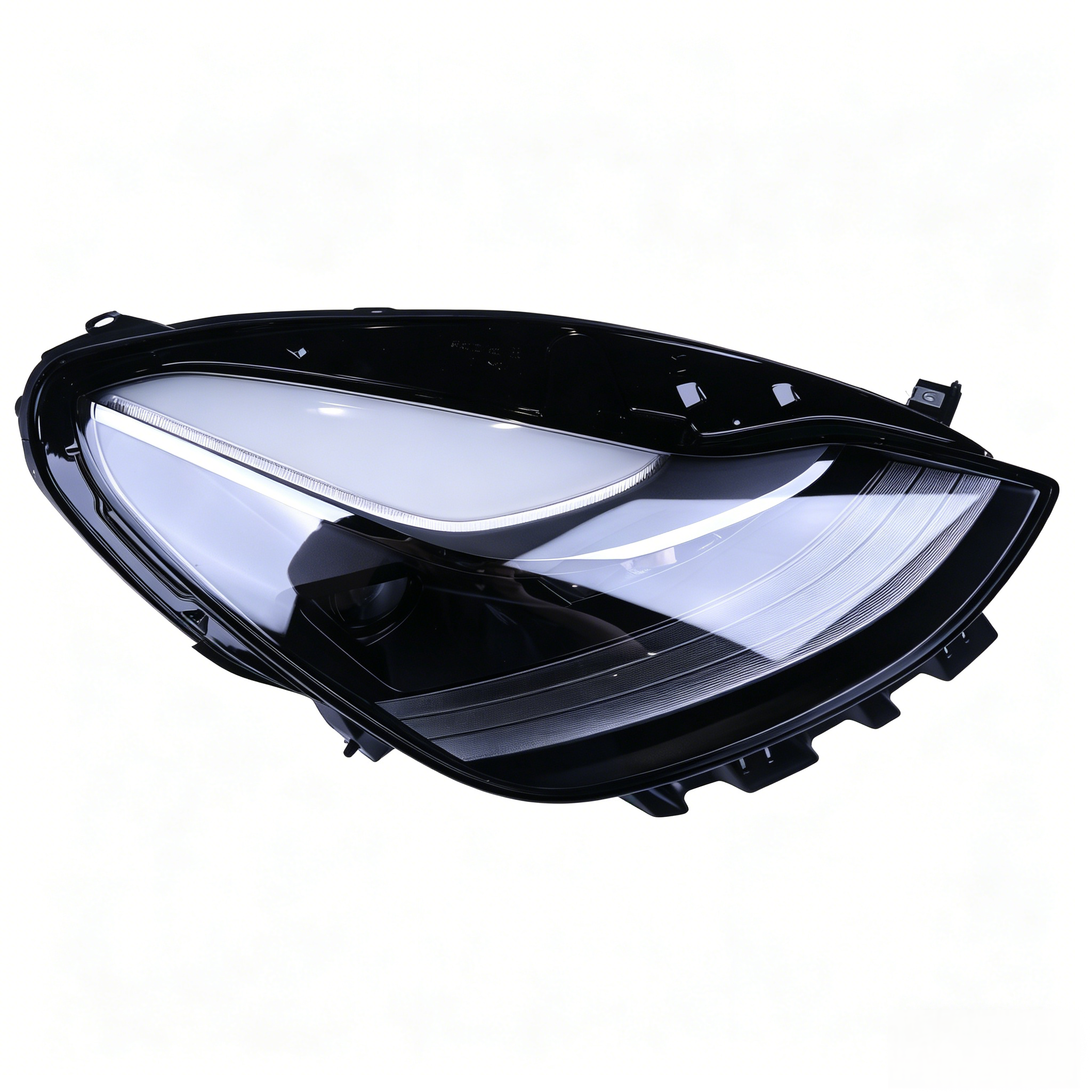
Understanding how headlight performance changes across different driving environments is crucial for vehicle safety and driver confidence. Modern headlight systems must adapt to diverse conditions ranging from urban streets with ambient lighting to remote rural roads shrouded in complete darkness. The effectiveness of a headlight depends not only on its technical specifications but also on how well it responds to environmental factors such as weather conditions, road surface characteristics, surrounding light pollution, and terrain variations. Whether navigating through fog-laden coastal highways, rain-soaked city streets, or snow-covered mountain passes, the performance characteristics of your vehicle's headlight system can mean the difference between clear visibility and hazardous driving conditions.
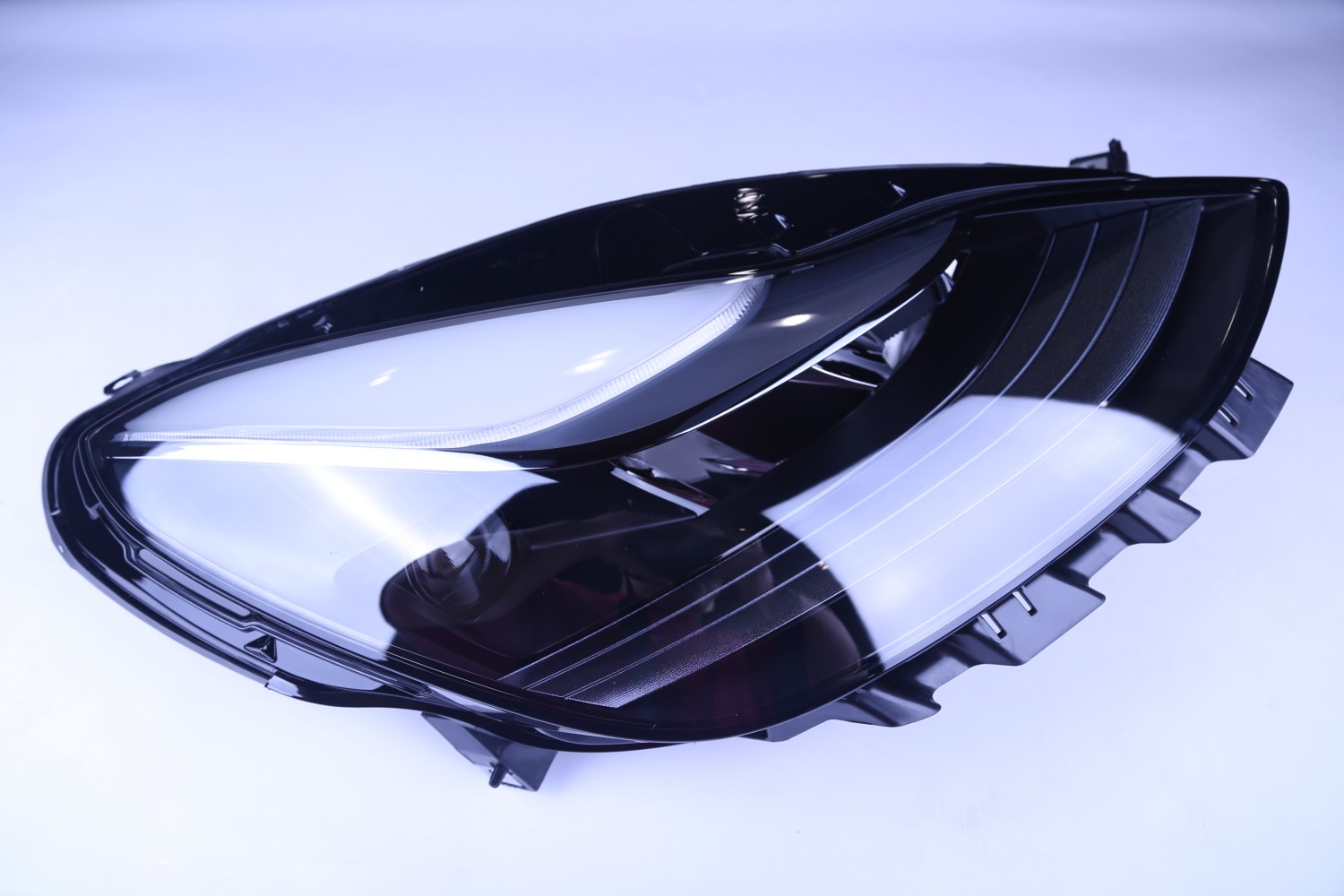
The variability in headlight performance across different driving environments stems from the complex interaction between light output characteristics, beam patterns, and environmental factors. Each driving scenario presents unique challenges that demand specific optical properties from your headlight assembly. Urban environments require controlled beam patterns to minimize glare for other drivers while providing adequate forward illumination. Highway driving demands long-range projection capabilities to identify hazards at greater distances. Off-road and rural conditions necessitate wider beam spreads to illuminate peripheral areas where wildlife or obstacles might emerge. Advanced LED and adaptive headlight technologies have revolutionized how vehicles respond to these varying demands, but understanding the fundamental principles of headlight performance variation remains essential for making informed decisions about automotive lighting upgrades and maintenance.
Urban Driving Environment Performance Characteristics
Light Distribution in City Traffic Conditions
In densely populated urban environments, headlight performance must balance adequate forward illumination with responsible light management to avoid blinding other road users. The presence of streetlights, commercial signage, and ambient light pollution significantly reduces the perceived importance of headlight intensity, yet proper beam pattern becomes even more critical. A well-designed headlight system in urban settings provides a sharp cutoff line that prevents upward light scatter while maintaining sufficient downward illumination for pedestrian detection and road surface visibility. The challenge lies in creating a beam pattern that illuminates traffic signs, lane markings, and potential hazards without contributing to the overall visual clutter that characterizes city driving at night.
Modern headlight assemblies designed for urban performance prioritize beam width over projection distance. The typical city driving scenario involves frequent stops, lower speeds, and proximity to other vehicles, making lateral visibility more valuable than long-range illumination. LED headlight technology excels in this environment due to its ability to produce precise beam patterns with minimal light waste. The color temperature of urban-optimized headlight systems typically ranges between 5000K and 6000K, providing a bright white light that enhances color recognition for traffic signals and signage without causing excessive glare. This spectral output also improves the visibility of reflective materials commonly used in urban infrastructure, enhancing overall situational awareness for drivers navigating complex city intersections and multi-lane traffic patterns.
Glare Management and Pedestrian Safety
The concentration of vulnerable road users in urban environments places additional demands on headlight performance characteristics. Pedestrians, cyclists, and motorcyclists share roadways with larger vehicles, creating scenarios where improper headlight aim or excessive intensity can compromise safety for everyone. Advanced headlight systems incorporate adaptive beam technology that detects oncoming traffic and automatically adjusts light output to minimize glare while maintaining optimal visibility for the driver. This dynamic response capability proves particularly valuable at intersections where multiple light sources converge and the risk of temporary blindness from opposing headlights reaches its peak.
The performance of headlight systems in urban pedestrian zones requires careful consideration of vertical beam angle and intensity gradients. Properly functioning headlight assemblies project the majority of their luminous output below the horizontal plane, ensuring that pedestrians at crosswalks and sidewalks receive adequate illumination without experiencing discomfort from direct light exposure. The uniformity of light distribution across the beam pattern becomes crucial in these scenarios, as dark spots or intensity variations can create visibility gaps where pedestrians might go unnoticed. Regular headlight alignment checks become essential in urban driving environments where the consequences of poor beam aim manifest more immediately through increased glare complaints and reduced pedestrian detection capabilities during nighttime operations.
Highway and Rural Road Performance Dynamics
Long-Range Illumination Requirements
Highway driving environments demand fundamentally different performance characteristics from headlight systems compared to urban scenarios. The increased travel speeds common on highways require extended projection distances to provide adequate reaction time for obstacle avoidance and hazard recognition. Effective highway headlight performance depends on achieving sufficient luminous intensity at distances of 300 to 400 feet ahead of the vehicle, allowing drivers traveling at highway speeds to identify potential dangers and make appropriate steering or braking decisions. The beam pattern for highway-optimized headlight assemblies emphasizes a concentrated central hotspot with gradual intensity falloff toward the periphery, maximizing the effective range of forward illumination without creating harsh transitions between illuminated and dark areas.
Rural road environments present additional challenges that test the limits of headlight performance capabilities. The absence of ambient lighting means that vehicle headlight systems become the sole source of illumination, placing greater demands on overall light output and beam pattern design. Modern LED headlight technology addresses these requirements through higher lumen output ratings and improved optical efficiency compared to traditional halogen systems. The color rendering properties of advanced headlight assemblies also become more significant in rural settings where natural features, wildlife, and unpaved road surfaces require accurate color perception for proper identification. Higher color temperatures in the 6000K to 6500K range provide enhanced contrast and detail resolution at extended distances, though they may produce slightly reduced performance in adverse weather conditions compared to warmer color temperatures.
Edge Illumination and Peripheral Vision
The width of the headlight beam pattern gains increased importance in rural and highway environments where shoulders, ditches, and roadside hazards exist beyond the primary travel lane. Effective headlight performance in these settings requires adequate lateral illumination to detect animals, debris, or stranded vehicles that might encroach on the roadway. The challenge lies in providing sufficient peripheral visibility without compromising the central beam intensity needed for long-range projection. Advanced headlight designs employ complex reflector geometries or multi-lens arrays to achieve this balance, directing specific portions of the total light output toward the road edges while maintaining concentrated illumination along the intended travel path.
Highway driving at sustained speeds also exposes headlight performance limitations related to vertical beam angle and road surface characteristics. The slight upward inclination of properly aimed headlight assemblies creates a visible hotspot at a specific distance ahead of the vehicle, with intensity decreasing both closer and farther from this optimal point. On undulating terrain common in rural highways, this fixed beam geometry means that visibility alternates between excellent and compromised as the vehicle crests hills or descends into valleys. Some premium headlight systems incorporate adaptive leveling mechanisms that adjust beam angle in response to vehicle pitch changes, maintaining consistent illumination patterns regardless of road grade variations. This technology proves particularly valuable in mountainous regions where dramatic elevation changes would otherwise create dangerous visibility gaps during nighttime travel.
Weather-Affected Environment Performance
Rain and Wet Road Surface Challenges
Precipitation fundamentally alters how headlight performance manifests in real-world driving conditions. Rain creates a complex optical environment where water droplets suspended in the air scatter and reflect light, reducing the effective penetration distance of headlight beams and creating veiling luminance that diminishes contrast between objects and their backgrounds. The performance degradation becomes particularly pronounced with higher-intensity headlight systems, as the increased light output paradoxically generates more backscatter that reduces the driver's ability to see beyond the immediate curtain of falling rain. This phenomenon explains why traditional high-beam headlight modes often prove counterproductive during heavy precipitation, necessitating reliance on low-beam patterns that minimize the volume of illuminated airspace between the vehicle and the road surface.
Wet road surfaces introduce additional complications to headlight performance through specular reflection that redirects light away from the driver's line of sight. Unlike dry pavement that exhibits diffuse reflection and scatters light in multiple directions, wet asphalt acts more like a mirror, reflecting the majority of incident light at angles that provide minimal benefit for forward visibility. This effect dramatically reduces the apparent brightness of road markings and surface features, making lane position judgment more difficult and increasing the importance of headlight beam patterns that maintain adequate ground illumination despite the reflective losses. LED headlight technology offers some advantages in these conditions through better control over beam shape and the ability to concentrate more light at specific angles that minimize reflection losses while maximizing the useful illuminated area visible to the driver.
Fog, Snow, and Reduced Visibility Scenarios
Fog represents perhaps the most challenging environmental condition for headlight performance evaluation. The microscopic water droplets that constitute fog create an exceptionally dense scattering medium that rapidly attenuates light transmission and generates severe backscatter effects. Standard headlight beams, particularly those with high color temperatures above 6000K, perform poorly in fog due to increased Rayleigh scattering of shorter wavelengths. Warmer color temperatures in the 3000K to 4500K range demonstrate superior fog-penetrating characteristics, which explains the traditional use of yellow or amber auxiliary fog lights in severe weather conditions. The optimal headlight performance strategy in fog involves minimizing light directed upward into the fog layer while maximizing low-angle illumination that remains closer to the road surface where particle density tends to be slightly lower.
Snow and ice conditions create yet another distinct set of headlight performance variables that differ from both rain and fog scenarios. Falling snow combines the scattering effects of rain with the reflective properties of ice crystals, creating intense backscatter that can overwhelm drivers with visual noise while simultaneously reducing forward visibility. The accumulated snow on road surfaces presents an exceptionally high-albedo environment where excessive headlight intensity can create glare problems and make it difficult to distinguish subtle terrain features or obstacles. Headlight systems optimized for winter conditions require carefully balanced intensity levels and beam patterns that provide adequate illumination without creating the visual confusion that results from over-illuminating a highly reflective snowscape. The performance of different headlight technologies varies considerably in these conditions, with some LED systems offering adaptive intensity control that automatically reduces output in response to detected backscatter levels.
Off-Road and Specialized Environment Performance
Terrain-Specific Illumination Needs
Off-road driving environments subject headlight performance to demands that differ substantially from on-road applications. The absence of defined travel lanes, presence of three-dimensional terrain features, and possibility of obstacles at varying heights and angles require headlight systems with broader beam patterns and more uniform intensity distribution across the entire illuminated area. Traditional road-focused headlight designs with their concentrated central hotspots and sharp upper cutoffs prove less effective in off-road scenarios where situational awareness depends on perceiving the entire surrounding environment rather than just the path directly ahead. Specialized off-road headlight configurations emphasize beam width and vertical coverage, accepting reduced maximum projection distance as a reasonable trade-off for improved peripheral and overhead visibility when navigating through forested areas, rocky terrain, or unmarked trails.
The durability aspects of headlight performance become particularly significant in off-road environments where vibration, impact, and environmental exposure exceed typical road driving conditions. LED headlight assemblies demonstrate clear advantages in these applications due to their solid-state construction that resists filament failure from shock and vibration. The instant-on characteristics of LED headlight technology also prove beneficial in off-road scenarios where frequent transitions between high and low beam modes occur as terrain and obstacle positions change rapidly. Color temperature selection for off-road headlight applications involves balancing the enhanced detail resolution provided by higher color temperatures against the improved depth perception and reduced eye strain associated with warmer light sources during extended nighttime operations in natural environments without ambient lighting.
Dust, Mud, and Lens Contamination Effects
Environmental contamination represents a unique performance factor for headlight systems operating in off-road or construction environments. Dust, mud, and debris accumulation on headlight lenses dramatically reduces effective light output and alters beam patterns in ways that compromise safety and visibility. The impact of lens contamination becomes more severe with higher-intensity headlight systems, as the reduced transmission efficiency not only decreases visible light output but also increases heat buildup within the headlight assembly that can accelerate deterioration of seals and optical components. Regular cleaning becomes essential for maintaining headlight performance in these environments, though the design of the headlight assembly itself plays a crucial role in determining how quickly contamination accumulates and how easily it can be removed.
Modern headlight technologies incorporate various features to mitigate contamination effects in challenging environments. Hydrophobic lens coatings help water and mud slide off more easily, reducing the formation of dried deposits that require mechanical cleaning. Some premium headlight assemblies include integrated washing systems that spray cleaning solution directly onto the lens surface, though these features add complexity and potential maintenance requirements. The sealed construction of LED headlight modules provides advantages over traditional reflector-and-bulb designs by preventing internal contamination that can cause permanent performance degradation. However, the external lens surface remains vulnerable to scratching and abrasion from airborne particles, emphasizing the importance of protective films or replaceable lens covers in severe off-road applications where headlight performance must be maintained despite harsh environmental exposure.
Technological Adaptations for Variable Environments
Adaptive Beam Technology and Environmental Response
The evolution of headlight technology has produced adaptive systems capable of modifying beam patterns and intensity in response to detected environmental conditions. Advanced headlight assemblies incorporate sensors that monitor ambient light levels, vehicle speed, steering angle, and traffic conditions to optimize illumination characteristics for the specific driving scenario. These adaptive headlight systems can automatically switch between urban-optimized patterns with wider, shorter beams and highway configurations with extended projection distances and concentrated central intensity. The transition occurs seamlessly without driver input, ensuring that headlight performance remains appropriate for the current environment while minimizing the distraction and cognitive load associated with manual lighting mode selection.
Matrix LED headlight technology represents the current pinnacle of adaptive performance capabilities, dividing the total light output among dozens of individually controllable elements that can be selectively dimmed or deactivated. This granular control enables sophisticated responses to environmental conditions such as selectively darkening portions of the beam pattern where oncoming or preceding vehicles are detected while maintaining full illumination elsewhere. The same technology allows adaptive response to road curvature by shifting the beam pattern laterally as the vehicle navigates turns, illuminating the intended travel path rather than projecting light into areas the vehicle will not enter. These advanced headlight systems demonstrate measurable improvements in driver reaction time and hazard detection across all environmental conditions, though their complexity and cost currently limit adoption primarily to premium vehicle segments.
Maintenance Impact on Environmental Performance
The sustained performance of headlight systems across variable driving environments depends critically on proper maintenance practices that address both mechanical and optical degradation. Headlight lens hazing caused by ultraviolet exposure and environmental contamination progressively reduces light transmission efficiency, with severely degraded lenses potentially blocking 50 percent or more of the intended light output. This performance loss affects all driving environments but proves particularly problematic in conditions where maximum visibility is already compromised by weather or ambient lighting limitations. Restoration or replacement of hazed headlight lenses restores original performance specifications and represents one of the most cost-effective interventions for improving nighttime visibility and environmental adaptability.
Proper headlight aim alignment constitutes another critical maintenance factor that influences performance across different environments. Misaligned headlight assemblies project beams either too high, causing glare for other drivers, or too low, reducing effective illumination distance and compromising the driver's ability to identify hazards at adequate reaction distances. The optimal aim point varies slightly depending on vehicle loading and typical operating conditions, but general specifications call for the headlight beam center to strike the road surface at a distance equal to the mounting height multiplied by a factor between 100 and 200. Regular verification and adjustment of headlight aim ensures that performance characteristics remain appropriate for the intended application and that environmental challenges do not combine with mechanical misalignment to create dangerous visibility deficiencies during nighttime operations.
FAQ
Why do my headlights seem less effective in fog compared to clear weather?
Fog significantly reduces headlight effectiveness because microscopic water droplets suspended in the air scatter light in all directions, creating backscatter that reflects toward the driver and reduces the amount of light reaching the road ahead. This scattering effect is more pronounced with cooler color temperatures and high-intensity beams. The light that does penetrate the fog undergoes multiple scattering events that reduce contrast and make it difficult to distinguish objects from their backgrounds. Using low-beam headlights with warmer color temperatures and avoiding high-beam modes helps minimize backscatter while maintaining the best possible forward visibility in foggy conditions.
Do LED headlights perform better than halogen in all driving environments?
LED headlights generally offer superior performance across most driving environments due to higher luminous efficiency, better beam pattern control, longer lifespan, and lower power consumption. However, some LED systems with very high color temperatures may perform slightly worse in fog or heavy precipitation compared to halogen lights with warmer color outputs. The solid-state construction of LED headlights also provides advantages in off-road or high-vibration environments where traditional filament bulbs are prone to failure. Overall, modern LED headlight assemblies deliver better visibility, safety, and adaptability across the full range of driving conditions, though specific performance characteristics depend on the quality of the LED system design and optical engineering.
How often should I check my headlight alignment for optimal performance?
Headlight alignment should be checked annually as part of routine vehicle maintenance, and additionally after any front-end collision, suspension work, or if you notice changes in beam pattern or reduced nighttime visibility. Misalignment can occur gradually through normal vehicle operation as mounting hardware loosens or suspension components settle. Professional alignment services use specialized equipment to ensure beams are aimed according to manufacturer specifications, optimizing both your forward visibility and minimizing glare for other drivers. If you frequently drive in challenging environments or notice that oncoming drivers flash their lights at you, an immediate alignment check is warranted regardless of the time since your last inspection.
Can I improve my existing headlight performance for different weather conditions?
Several approaches can enhance headlight performance across varied environmental conditions without complete replacement. Restoring hazed or yellowed lenses through professional polishing or lens replacement kits immediately improves light transmission and beam quality. Upgrading to higher-quality bulbs within your existing headlight assembly can provide modest improvements in output and color temperature. Adding auxiliary lighting such as fog lights optimized for low-angle illumination helps in adverse weather. For substantial performance gains across all conditions, upgrading to complete LED headlight assemblies designed for your vehicle model provides the most comprehensive improvement, delivering better beam patterns, higher output, and enhanced visibility in rain, fog, and clear conditions while maintaining proper light distribution that minimizes glare for other road users.
Table of Contents
- Urban Driving Environment Performance Characteristics
- Highway and Rural Road Performance Dynamics
- Weather-Affected Environment Performance
- Off-Road and Specialized Environment Performance
- Technological Adaptations for Variable Environments
-
FAQ
- Why do my headlights seem less effective in fog compared to clear weather?
- Do LED headlights perform better than halogen in all driving environments?
- How often should I check my headlight alignment for optimal performance?
- Can I improve my existing headlight performance for different weather conditions?